1. Who Is Maa Skandamata?
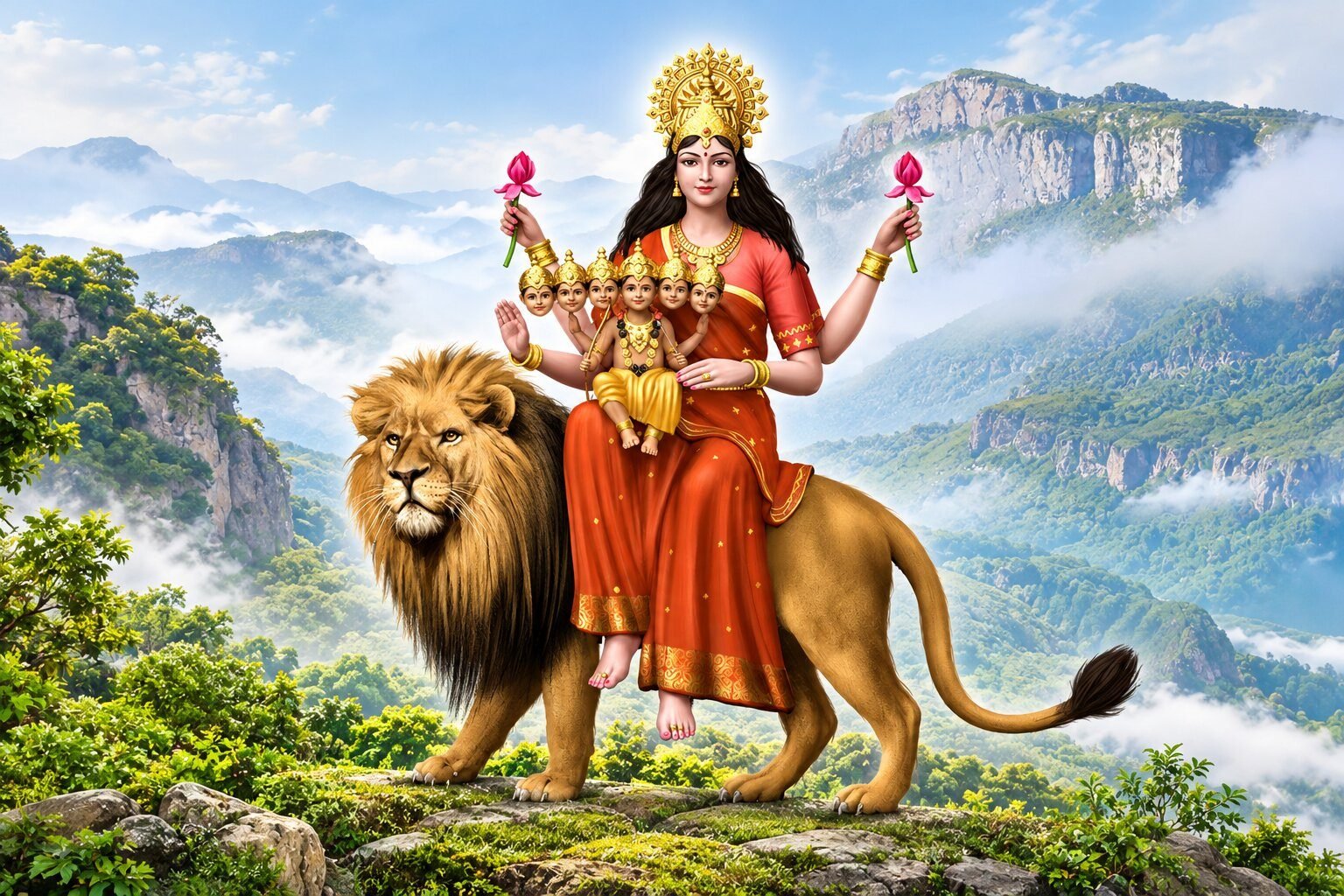
Maa Skandamata is the mother of Lord Skanda, also known as Lord Kartikeya, the god of war and the commander of the divine army. The word Skandamata is formed from two words: “Skanda,” referring to Lord Kartikeya, and “Mata,” meaning mother.
She is commonly depicted seated on a lotus flower, holding baby Skanda in her lap. She is also known as the Lotus Goddess because of her association with the lotus.
Her divine appearance represents motherhood, purity, compassion, strength, and spiritual wisdom. Although she is a loving mother, she also symbolizes the courage and power required to protect righteousness.
2. History and Mythological Story of Maa Skandamata
According to Hindu mythology, Lord Kartikeya was born to defeat the powerful demon Tarakasura. Tarakasura had received a boon that he could only be defeated by the son of Lord Shiva. To restore peace and protect the universe, the birth of Lord Kartikeya became essential.
Goddess Parvati, the divine consort of Lord Shiva, became the mother of Lord Kartikeya, who later led the divine forces against Tarakasura.
As the mother of Lord Skanda, Goddess Parvati is worshipped in this form as Maa Skandamata. Her story symbolizes the power of motherhood, divine protection, courage, and the victory of good over evil.
The worship of Maa Skandamata during Navratri reminds devotees that love, faith, and inner strength can help overcome difficulties.
3. Why Do We Worship Maa Skandamata?
Devotees worship Maa Skandamata to seek her blessings for a peaceful, prosperous, and harmonious life. She represents the nurturing energy of the Divine Mother and inspires people to follow the path of righteousness.
The main spiritual reasons for worshipping Maa Skandamata include:
- Peace and Happiness: Devotees pray for harmony and positivity in their homes.
- Family Well-being: She is worshipped for the well-being and protection of family members.
- Wisdom and Knowledge: Her blessings are sought for clarity, understanding, and spiritual growth.
- Motherhood and Children: Many devotees pray for the well-being of their children and family happiness.
- Courage and Strength: Her worship inspires devotees to face challenges with faith and determination.
- Spiritual Progress: Devotees seek to strengthen their devotion and move towards a more peaceful and disciplined life.
These are traditional religious beliefs and are followed as part of Hindu devotional practice.
4. Significance of Maa Skandamata Worship
Maa Skandamata is regarded as a symbol of unconditional love, compassion, purity, and divine motherhood. Her worship holds special significance during the five-day progression of devotion in Navratri, particularly on the fifth day.
She is traditionally associated with the Vishuddha Chakra, or throat chakra, in some spiritual interpretations. This chakra is connected with communication, truth, and self-expression.
The lotus on which she sits symbolizes purity and spiritual awakening. Her depiction with Lord Kartikeya in her lap represents the inseparable bond between a mother and her child.
According to devotional traditions, worshipping Maa Skandamata helps devotees cultivate patience, kindness, faith, and positive thinking.
5. Maa Skandamata Puja Vidhi: How to Worship Her at Home
Devotees can worship Maa Skandamata at home with a clean space, simple puja materials, and sincere devotion.
Step 1: Clean the Puja Area
Clean your home and the place where you perform puja. Take a bath and wear clean clothes before beginning the worship.
Step 2: Prepare the Puja Altar
Place an image or idol of Maa Skandamata on a clean platform. Light a diya and incense sticks, following your family's customary puja practices.
Step 3: Offer Flowers
Offer fresh flowers, especially yellow or white flowers if available. You may also offer a lotus flower as a devotional symbol.
Step 4: Offer Bhog
Offer bananas, seasonal fruits, sweets, or other suitable vegetarian offerings according to your family tradition. Prepare the offering with cleanliness and devotion.
Step 5: Chant the Sacred Mantra
Chant Maa Skandamata's mantra with concentration and devotion:
“ॐ देवी स्कन्दमातायै नमः॥”
You may repeat the mantra 11, 21, or 108 times according to your time and devotional practice.
Step 6: Perform Aarti
Perform Maa Skandamata's aarti and pray for the well-being of your family, peace in your home, and strength to overcome difficulties.
Step 7: Conclude the Puja
Offer your prayers with a sincere heart and distribute the prasad among family members.
Note: Puja materials and rituals may vary according to regional customs, family traditions, and personal beliefs.
6. Maa Skandamata Mantra
The commonly recited mantra for Maa Skandamata is:
ॐ देवी स्कन्दमातायै नमः॥
Transliteration: Om Devi Skandamatayai Namah.
Meaning: I bow to Goddess Skandamata, the divine mother of Lord Skanda.
Devotees chant this mantra to express their devotion and seek the blessings of the Divine Mother. It can be recited during daily worship or on the fifth day of Navratri.
7. What Bhog Should Be Offered to Maa Skandamata?
Devotees traditionally offer bananas, fresh fruits, sweets, and other vegetarian foods to Maa Skandamata. In many devotional traditions, bananas are especially associated with her worship.
You can offer:
- Bananas and other seasonal fruits
- Homemade sweets
- Kheer or other traditional vegetarian preparations
- Clean drinking water
- Fresh flowers
The offering should be prepared with cleanliness and devotion. Follow your family's customary practices when selecting bhog.
8. Which Colour Is Associated with Maa Skandamata?
Yellow is commonly associated with Maa Skandamata in many Navratri colour traditions. Yellow represents happiness, optimism, knowledge, and positivity.
Devotees may choose to wear yellow clothes or decorate their puja area with yellow flowers. However, Navratri colour traditions can vary by region and calendar.
9. Spiritual Lessons from Maa Skandamata
The worship of Maa Skandamata teaches several important lessons:
- Unconditional Love: Care for others with kindness and compassion.
- Courage: Face life's challenges with confidence and faith.
- Purity: Maintain honesty and positive intentions in your actions.
- Patience: Approach difficult situations with calmness and understanding.
- Devotion: Strengthen your spiritual connection through prayer and good deeds.
Her form reminds devotees that compassion and strength can exist together.
10. Conclusion
Maa Skandamata, the fifth form of Goddess Durga, represents divine motherhood, compassion, wisdom, and protection. Her mythological story reflects the importance of courage, faith, and the victory of righteousness over evil.
During Navratri, devotees worship her with flowers, bhog, mantra chanting, and aarti. More than the rituals alone, sincere devotion, kindness, and positive actions are considered important aspects of worship.
May Maa Skandamata bless everyone with peace, happiness, wisdom, and prosperity.
Jai Maa Skandamata!
About AstroSane
AstroSane is your spiritual destination for astrology guidance, puja services, and authentic puja samagri. Explore spiritual insights and connect with experienced astrologers for guidance related to life's important questions.
Visit: https://astrosane.com
Contact: +91 74579 45450