Introduction: Who Is Maa Kushmanda?
Navratri is one of the most important Hindu festivals, dedicated to the worship of the nine forms of Goddess Durga. Maa Kushmanda is the fourth form of Navadurga and is worshipped on the fourth day of both Sharad Navratri and Chaitra Navratri.
According to Hindu religious beliefs, Maa Kushmanda is regarded as the divine creator of the universe. Her worship symbolizes light, energy, positivity, prosperity, and new beginnings.
Devotees worship Maa Kushmanda to express their faith and seek inner strength, courage, peace, and spiritual growth. Let us explore her mythological story, religious significance, and the simple method of worshipping her at home.
Mythological Story and History of Maa Kushmanda
According to Hindu mythology, before the creation of the universe, darkness prevailed everywhere. There was no light, and the universe had not yet taken its present form.
Religious traditions describe Maa Kushmanda as the primordial divine energy who began the process of creation through her divine smile. Her radiant energy brought light and life into the universe.
For this reason, she is worshipped as the source of creation and the divine power that sustains cosmic energy.
The name Kushmanda is traditionally associated with the cosmic egg, symbolizing the origin and creation of the universe. Her name and form represent creativity, life-giving energy, and the power of the Divine Mother.
What Does Maa Kushmanda Look Like?
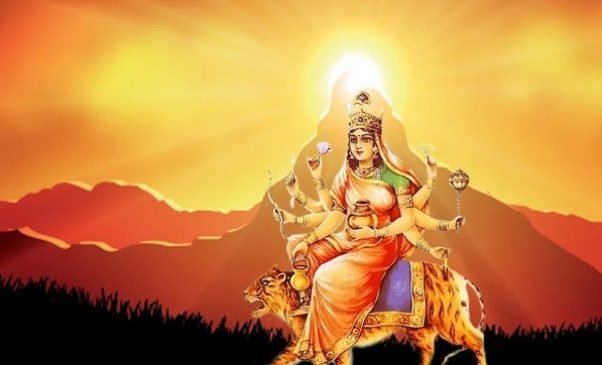
Maa Kushmanda is traditionally depicted with eight arms, which is why she is also known as Ashtabhuja Devi.
Her hands are commonly shown holding symbolic objects such as a kamandalu, bow, arrow, lotus, nectar pot, discus, mace, and rosary. She is traditionally associated with a lion as her vehicle.
Her radiant appearance symbolizes courage, divine power, wisdom, creativity, and the triumph of light over darkness.
Why Do Devotees Worship Maa Kushmanda?
Devotees worship Maa Kushmanda on the fourth day of Navratri to seek divine blessings and spiritual progress. According to religious beliefs, her worship is associated with the following aspirations:
- Happiness and Prosperity: Devotees pray for peace, harmony, and well-being within their families.
- Health and Energy: Worshippers seek blessings for good health, vitality, and enthusiasm.
- Confidence and Courage: Her worship inspires devotees to face life's challenges with determination.
- Positivity: Devotees are encouraged to develop an optimistic outlook and overcome negative thoughts.
- Spiritual Growth: Her worship provides an opportunity for prayer, self-reflection, and strengthening one's devotion.
These benefits are rooted in religious faith and tradition. The central purpose of worship is to express devotion, cultivate positive values, and seek inner peace.
Puja Samagri Required for Maa Kushmanda Puja
You can arrange the following items for a simple home puja:
- An image or idol of Maa Kushmanda or Goddess Durga
- Clean water and a water vessel
- A diya with ghee or oil and a cotton wick
- Roli, kumkum, and akshat (unbroken rice grains)
- Fresh flowers and a flower garland
- Fruits, sweets, and malpua
- Dhoop or incense sticks
- Naivedya and prasad
- A clean mat or seat for worship
If all the items are not available, you can perform a simple puja according to your faith and convenience.
How to Worship Maa Kushmanda at Home: Step-by-Step Puja Vidhi
1. Take a Bath and Prepare the Puja Area
Wake up in the morning, take a bath, and wear clean clothes. Clean your puja area and place the image or idol of Maa Kushmanda on a clean platform.
2. Light a Diya and Begin the Puja
Light a diya in front of the Goddess and offer incense. Sit peacefully, focus your mind, and meditate on Maa Durga and Maa Kushmanda.
3. Offer Flowers and Akshat
Offer fresh flowers, roli, kumkum, and akshat to the Goddess. Fold your hands and pray for the happiness, peace, health, and prosperity of your family.
4. Chant the Maa Kushmanda Mantra
Chant the following mantra with devotion:
Om Devi Kushmandayai Namah.
You may chant the mantra 11, 21, or 108 times, according to your preference. Try to remain calm and focused while chanting.
5. Offer Bhog to Maa Kushmanda
Devotees traditionally offer fruits, sweets, and malpua to Maa Kushmanda. Some families also offer pumpkin-based preparations or other sattvic foods according to their family traditions.
After offering the bhog, distribute the prasad among family members.
6. Read the Goddess's Story and Perform Aarti
Read or listen to the mythological story of Maa Kushmanda. Afterward, perform the aarti of Goddess Durga and pray for the well-being and happiness of everyone.
7. Conclude the Puja with a Prayer
At the end of the puja, seek the Goddess's blessings and ask for forgiveness for any mistakes made during the rituals.
Offering food, clothes, or other useful items to people in need is also considered a virtuous act in Hindu tradition.
Please note that puja rituals may vary according to regional customs, family traditions, and personal beliefs.
What Is the Favourite Bhog of Maa Kushmanda?
Malpua, fruits, and various sweets are commonly offered to Maa Kushmanda as bhog. Devotees generally prefer pure and sattvic food for religious offerings.
Offer the bhog with devotion and distribute the prasad among family members and others afterward.
The specific offerings may differ according to local customs and family traditions.
Maa Kushmanda Mantra for Navratri
Devotees can chant the following mantra while worshipping Maa Kushmanda:
Om Devi Kushmandayai Namah.
Meaning: Salutations to Goddess Kushmanda.
Devotees chant this mantra to express their devotion to the Divine Mother and to cultivate concentration, peace, and spiritual awareness.
What Can We Learn from Maa Kushmanda's Worship?
The story of Maa Kushmanda reminds devotees that light can emerge even from darkness. Her divine form symbolizes hope, creativity, energy, and the beginning of something new.
During Navratri, devotees can take inspiration from her story by developing a positive mindset, remaining patient during difficult times, and showing kindness and compassion toward others.
Her worship also offers an opportunity to reflect on the importance of courage, determination, and inner strength in everyday life.
Conclusion
Maa Kushmanda is the fourth form of Navadurga and is worshipped on the fourth day of Navratri. According to Hindu religious traditions, she represents creation, divine light, and cosmic energy.
Her worship includes lighting a diya, offering flowers and bhog, chanting her mantra, listening to her story, and performing aarti.
This Navratri, remember Maa Kushmanda with devotion and welcome the values of peace, harmony, hope, and positivity into your life.
Connect with AstroSane
For more information about Goddess Durga, Navratri rituals, puja services, and astrology, visit AstroSane.com.
Connect with experienced astrologers for personalized guidance on questions related to your life, career, relationships, marriage, and spiritual journey.
Website: https://astrosane.com
AstroSane — Sarvang Jyotish Darshan