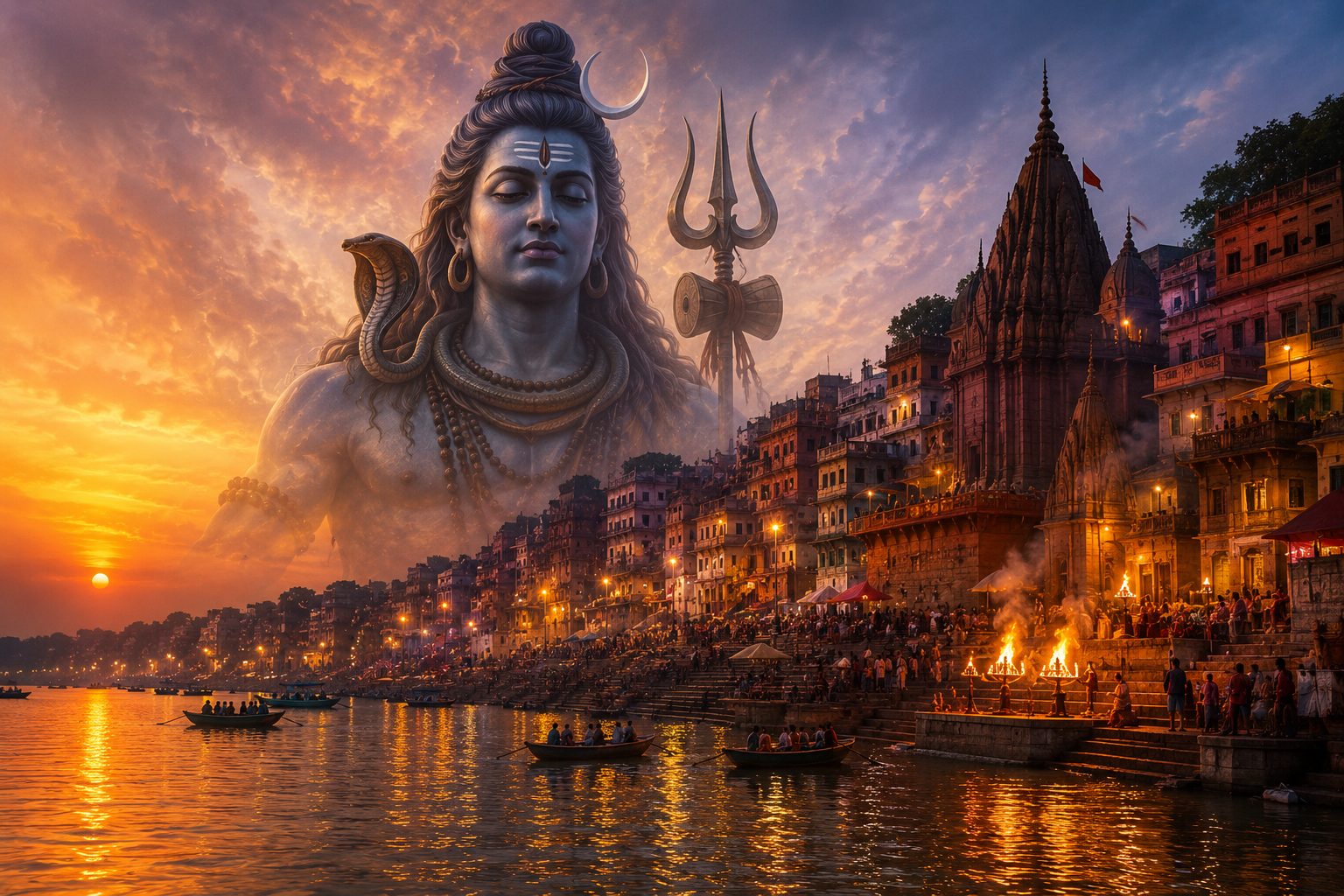
According to Hindu scriptures, Kashi was founded by Lord Shiva himself. Unlike ordinary cities, Kashi is believed to rest upon the trident of Shiva, making it a place beyond the limitations of time and space. It is often referred to as the “City of Light” because it is believed to illuminate the path to spiritual awakening and liberation.
One of the greatest mysteries of Kashi lies in its connection with Moksha, or salvation. Ancient texts state that those who die in Kashi attain freedom from the cycle of birth and rebirth. It is believed that Lord Shiva personally whispers the sacred Taraka Mantra into the ears of departing souls, guiding them toward eternal liberation. This belief has attracted countless devotees to spend their final days in the holy city.
The sacred River Ganga adds another layer to Kashi's mystical identity. Devotees believe that a dip in the holy waters washes away sins accumulated over lifetimes. Every morning, the ghats come alive with prayers, meditation, and rituals, while the mesmerizing Ganga Aarti in the evening transforms the riverfront into a spectacle of devotion and divine energy.
Kashi is home to numerous ancient temples, each carrying its own legends and secrets. The Kashi Vishwanath Temple, dedicated to Lord Shiva, is considered one of the most sacred shrines in Hinduism. Pilgrims believe that a visit to this temple grants spiritual blessings and inner peace. Hidden within the narrow lanes of the city are countless shrines, each preserving centuries-old traditions and stories.
Another fascinating mystery is the city's timeless nature. Empires have risen and fallen, kingdoms have disappeared, and civilizations have changed, yet Kashi continues to thrive. Historians, archaeologists, and spiritual seekers alike are captivated by the city's ability to preserve its essence through thousands of years of change.
The cremation ghats of Kashi, particularly Manikarnika Ghat, are among the most mysterious places in the city. Funeral pyres burn day and night, symbolizing the eternal cycle of life and death. Despite being a place associated with mortality, the atmosphere is often described as peaceful and spiritually uplifting, reminding visitors of the impermanence of worldly existence.
Kashi is also a center of knowledge and wisdom. For centuries, scholars have gathered here to study philosophy, astronomy, literature, music, and spirituality. The city has inspired countless poets, saints, and thinkers who have contributed significantly to India's cultural heritage.
Beyond its temples and rituals, Kashi represents a deeper spiritual truth. It teaches that life and death, joy and sorrow, creation and destruction are all interconnected aspects of existence. Every lane, every ghat, and every temple echoes the wisdom of ages, inviting visitors to look beyond the material world and discover their inner selves.
The mysteries of Kashi continue to inspire wonder and devotion. Whether viewed through the lens of history, mythology, or spirituality, Kashi remains a place where the divine and the earthly meet. It is a city that transcends time, offering every visitor a glimpse into the eternal.
Kashi is not just a destination—it is an experience, a journey into the heart of India's spiritual heritage, and a timeless reminder of humanity's quest for truth, enlightenment, and liberation.